Research/Technical Note | | Peer-Reviewed

Selection of Toughening Materials for Epoxy Resins and Discussion on Toughening Technology Approaches

Received: 11 November 2025     Accepted: 21 November 2025     Published: 17 December 2025
Views:       Downloads:
Abstract

The technical approaches for toughening epoxy resins include chemical and physical methods. Regarding the chemically reactive toughening (CRT)methods, this study employs reactive toughening agents and compares the toughening effects of several agents such as carboxyl-terminated polyether (CTPE), carboxyl-terminated polytetrahydrofuran (CTPF), carboxyl-terminated liquid butadiene nitrile rubber (CTBN), and core-shell polymers containing polybutadiene (CSP), on epoxy resins. These toughening agents are incorporated into the epoxy resin through chemical reactions or dispersion, forming flexible segments with impact resistance. During the curing process, micro-phase separation occurs, forming an island structure that absorbs energy under stress. At equivalent dosages, all toughening agents have a significant toughening effect on epoxy resin, with a notable improvement in impact resistance. Among them, CTPF and CTBN demonstrated particularly pronounced improvements, with the impact strength of CTPF-modified resin increasing by 257%. These agents form homogeneous phases in epoxy resin with minimal impact on transparency, making them viable options for transparent toughening. CTPE and CTPF lead to a decrease in thermal resistance, while CTBN and CSP have almost no effect on thermal resistance. CTPE and CTPF exhibited decreased volume resistivity due to enhanced impurity ion migration caused by flexible polyether segments. CSP improved electrical strength by reducing the effective carrier mobility of its structure. For the physical added thoughening (PAT) methods of toughening epoxy resin, this paper adopts the physical addition approach and compares the effects of special engineering plastics (SEP) such as polyetheretherketone (PEEK), polyimide (PI), thermoplastic polyimide (TPI), and polyphenylene sulfide (PPS) on the mechanical, thermal, and electrical properties of epoxy resin. The rigid and active group-containing SEP forms a difference phase during the curing process of epoxy resin, absorbing energy under stress, preventing the propagation of microcracks, and improving the mechanical properties of epoxy resin, including tensile, compressive, and impact strength. Due to the phase separation caused by the physical toughening method, there is significant light reflection and absorption loss, making it usually difficult to be used as a transparent toughening method. SEP has better heat resistance than epoxy resin, which is beneficial for enhancing the heat resistance of epoxy resin. During the curing process of epoxy, a strong intermolecular force is generated between SEP and epoxy resin, further enhancing the heat resistance of the modified epoxy resin. Adding SEP with better insulation performance can effectively improve the insulation performance of epoxy resin.

Published in American Journal of Materials Synthesis and Processing (Volume 10, Issue 2)
DOI 10.11648/j.ajmsp.20251002.12
Page(s) 36-49
Creative Commons

This is an Open Access article, distributed under the terms of the Creative Commons Attribution 4.0 International License (http://creativecommons.org/licenses/by/4.0/), which permits unrestricted use, distribution and reproduction in any medium or format, provided the original work is properly cited.

Copyright

Copyright © The Author(s), 2025. Published by Science Publishing Group

Keywords

Epoxy Resin, Chemically Reactive Toughening, Physically Added Toughening, Mechanical Properties, Thermal Performance, Electrical Performance, Optical Performance, Heat Resistance

1. Introduction
Epoxy resin is a widely utilized thermosetting polymer renowned for its outstanding mechanical properties, low shrinkage, excellent chemical resistance, and superior electrical insulation . It finds extensive applications in diverse industries, including electronics and electrical engineering, machinery, construction, and aerospace. However, the cured epoxy resin exhibits a highly cross-linked network structure. Concurrently, volume shrinkage during the curing process induces internal stresses, which compromise resistance to crack initiation and propagation, resulting in high brittleness . This significantly restricts its applicability in electronic packaging and other fields requiring high impact resistance and flexibility. Therefore, enhancing the toughness of epoxy resins is of critical importance. Moreover, conventional epoxy resins typically exhibit moderate thermal stability, which limits their performance in demanding engineering environments and constrains their broader application potential . Consequently, enhancing toughness and improving thermal resistance have long remained central research objectives in the development of epoxy resins. In contemporary applications particularly in electronic material bonding and packaging, there is a growing demand for superior dielectric properties, driving increased interest in optimizing the electrical insulation performance of epoxy-based materials .
Currently, the toughening mechanisms of epoxy resins can be categorized into three types based on their microstructural differences. The first method involves toughening by forming a phase-separated structure between the modifier and the matrix . Key modifiers include rubber elastomers, rigid inorganic nanoparticles, block copolymers, thermoplastic resins, and core-shell structured polymers. The critical factors for this modification approach are the compatibility between the modifier and the epoxy resin, as well as the regulation of the phase structure. The second method involves toughening through the formation of two interlocking crosslinked networks . For instance, co-curing long-chain polymers with epoxy resin allows the long chains to continuously traverse the epoxy crosslinking network, forming interpenetrating or semi-interpenetrating networks to achieve toughening. The key to this method lies in controlling the domain size to achieve optimal interpenetration. The final approach involves modifying the chemical structure of the crosslinked network . This is achieved by introducing flexible segments or hybrid crosslinking to enhance segment mobility and improve toughness. Examples include incorporating flexible groups such as ether bonds, carbon-nitrogen bonds, and siloxane bonds, or introducing highly tough epoxy segments to reduce the resin's rigidity. The key to this method lies in the selection and introduction of flexible segments, with the final structure and properties being regulated by adjusting the ratio of different structural combinations.
Zhou et al utilized epoxy-hydroxyl-terminated polybutadiene (EHTPB) liquid rubber to toughen epoxy resin. Results indicated that the introduction of epoxy groups enhanced interfacial compatibility between the two materials and improved dispersion. Upon adding 15% EHTPB, the elongation at break reached its maximum value (7.3%), while the flexural strength and tensile strength remained unchanged. However, the instability of double bonds in EHTPB at elevated temperatures may lead to reduced thermal stability in the modified epoxy. Di et al investigated the mechanical properties, thermal properties, and processing characteristics of CSR nanoparticles and nano-SiO₂ modified EP. Within a certain addition range, CSR particles enhanced the resin's elongation at break and toughness, while SiO₂ improved the matrix's strength and modulus. The prepared composites featured simple processing, low system viscosity, and extended service life. Jung et al incorporated the thermoplastic polymer polyethersulfone (PES) as a toughening agent into bisphenol A-type epoxy resin. They observed that when the PES content was below 15 phr, agglomerated PES particles were scarcely visible because they formed a semi-interpenetrating polymer network within the epoxy matrix. Dispersed PES particles improved the tensile properties and fracture toughness of the epoxy resin by impeding rapid crack propagation during fracture. As the PES content in the samples increased, the interfacial adhesion between PES particles and the epoxy matrix grew, gradually enhancing the thermal resistance of the epoxy resin.
Furthermore, a substantial body of literature indicated that rubber elastomer-toughened epoxy resins lower the system's glass transition temperature, making them unsuitable for applications with high temperature requirements. In contrast, incorporating thermoplastic resins into epoxy resins offers the advantage of enhanced heat resistance, which cannot be achieved through rubber toughening. However, adding thermoplastic resins typically causes a significant increase in system viscosity. Therefore, when selecting thermoplastic resins as toughening agents, the molecular weight of the chosen resin must be compatible with the blend system. Primary toughening mechanisms include crosslinking constraint effects, crack pinning, particle tearing and stretching, and void shear yielding. When composite materials undergo external stress, fillers within the matrix exert crosslinking constraint, passivation, and crack propagation inhibition effects. Additionally, crosslinking forces anchor cracks at crosslinking points, achieving toughening.
Based on the above considerations, this paper adopted two types of toughening techniques physical addition type and chemical reaction type to toughen the epoxy resin. Our preliminary work investigated the effects of chemical reactive toughening and physically added toughening on epoxy resin properties, but the effects of different technical routes on epoxy properties were not compared with each other. Therefore, this paper summarizes the previous work, and improves the discussion of related heat resistance and optical properties. For each technique, several materials were selected for research, and their toughening effects were discussed. The efficacy of different technical routes and different toughening materials was also explored. We anticipate that the conclusions of this paper will provide valuable reference for selecting toughening agents to enhance the adaptability of epoxy resins in fields such as electronic packaging.
2. Experimental Section
2.1. Reagents and Materials
The main materials used in this paper were shown in Table 1.
Table 1. Major Materials.

Name

model

Composition and specification

Manufacture

Epoxy Resin

128R

epoxy equivalent: 190g/eq, Viscosity: 12000~15000 mPa·s (25°C)

Taiwan South Asia company

Benzyl glycidyl ether

XY-692

epoxy equivalent: 220g/eq, Viscosity: 2-8 mPa·s (25°C)

Anhui hengyuan new material co., Ltd.

CTPE

50A

viscosity: 10000~30000mPa·s (25°C)

China Bluestar Chengrand Co., Ltd.

CTPF

50F

viscosity: 10000~20000mPa·s (25°C)

China Bluestar Chengrand Co., Ltd.

CTBN

1300*6

acrylonitrile conten 18%

Huntsman Corporation

CSP

BPM-520

melting point 132 ~ 149°C

Dow Inc.

PEEK

330UPF

density: 1.30 g/cm3, particle size: 900 mesh

Jilin Zhongyan Polymer Co., Ltd

PI

PI-1

density: 1.31 g/cm3

Zigong Zhongtiansheng New Materials Technology Co., Ltd

TPI

VAT001

density: 1.33 g/cm3, Tg: 245°C

Wanrun Co., Ltd

PPS

P-32

density: 1.30 g/cm3, melt flow rate: 330g/10mi

Shandong Binhua Binyang Ranhua Co., Ltd

Polyetheramine

EC-301

active hydrogen equivalent: 61 g/eq, viscosity: 10 mPa·s (25°C)

BASF

PMDA

-

purity: 98%

Shanghai McLean Biochemical Technology Co, Ltd

Fumed silica

TS-720

purity: 99%

CABOT Corp, USA

2.2. Testing Instruments and Equipment
INSTON 5967 electronic universal material testing machine, INSTRON Company, USA (tensile strength and breaking elongation test). INSTRON CAST 9050 impact testing machine, INSTRON Company, USA (Impact performance test). SDTA2+ thermomechanical analyzer, Mettler toledo Company, USA. SM7120 high impedance meter, HIOKI Corporation, Japan; DT2-100-50-SP high voltage breakdown instrument, Sepelec, France. NDJ-1Fmax touch screen viscometer, Shanghai xiniu leibo instrument Co., Ltd. UV-26001 ultraviolet-visible spectrophotometer, Shimadzu Instruments Co., Ltd.
2.3. Preparation of Toughened Epoxy Resin
This study employed two types of materials for toughening, including chemically reactive toughening agents and physically added toughening agents. Among the chemically reactive toughening agents, several materials were selected for reaction with or dispersion into the epoxy resin matrix, including CTPE, CTPF, CTBN, and CSP. These toughening agents were reacted with epoxy resin component before undergoing a curing reaction with EC-301. For comparative purposes, all reactive toughening agents were added to the epoxy resin component at the mass ratio of 18%. The mixture was subsequently cured under conditions of 80°C for 3 hours. The mixing ratios are shown in Table 2.
Table 2. Ratio and Dosage of CRT.

Type

CRT-0

CRT-1

CRT-2

CRT-3

CRT-4

128R

74

74

72

72

72

XY-692

9

9

9

9

9

KH560

1

1

1

1

1

CTPE

-

18

-

-

-

CTPF

-

-

18

-

-

CTBN

-

-

-

18

-

CSP

-

-

-

-

18

EC-301

30

30

30

30

30

Physical additive toughening utilized specialty engineering plastics such as PEEK, PI, TPI, and PPS. These were directly blended as powders into epoxy resin, then cured with PMDA to compare the toughening effects. These engineering plastics exhibit excellent heat resistance with high glass transition and melting temperatures (as shown in Table 3). Conversely, epoxy resin undergoes thermal oxidation decomposition at 180–200°C under aerobic conditions during heating, and even decomposes at 300°C in an oxygen-free environment. Therefore, it is impossible to dissolve SEP into liquid epoxy resin via melting. To address this issue, we employed plastic powder with the finest possible particle size. Through blending, it was uniformly dispersed into the epoxy resin as a toughening component.
Table 3. Typical Parameters and Indicators for SPE.

SEP name

Model

Tg/℃

melting temperature/℃

PEEK

330UPF

≥200

343-387

PI

PI-1

≥200

300-400

TPI

VAT001

245

260-450

PPS

P-32

≥200

280-380

For the sake of discussion, the mass fraction of SEP in this study was controlled at 10% relative to the epoxy resin. These SEP powders were homogenously blended with the epoxy resin using a homogenizer, then uniformly mixed with the PMDA. The mixture was subsequently cured under conditions of 150°C for 3 hours. The mixing ratios are shown in Table 4.
Table 4. Ratio and Dosage of PAT.

Type

PAT-0

PAT-1

PAT-2

PAT-3

PAT-4

128R

95

95

95

95

95

XY-692

5

5

5

5

5

TS-720

2

2

2

2

2

PEEK

-

10

-

-

-

PI

-

-

10

-

-

TPI

-

-

-

10

-

PPS

-

-

-

-

10

PMDA

43

43

43

43

43

2.4. Characterization Techniques and Performance Testing
2.4.1. Viscosity Measurements
In accordance with standard GB/T 2794—2022, the viscosity of the resin was measured using a rotary viscometer. The rotor model used was No. 29, and the test temperature was 25°C.
2.4.2. Mechanical Properties
The tensile properties were assessed using an electronic universal testing machine, in compliance with Chinese standard GB/T 2567-2021. Tensile tests utilized dumbbell-shaped specimens measuring 250×20×4 mm3, and the stretching speed was 2 mm/min. The experimental data were obtained by calculating the average values of 5 specimens and considering standard deviation. The compressive strength and compressive modulus of elasticity of the specimens were tested using the same standard. The specimens were circular cast specimens with dimensions of φ10 mm × 25 mm.
The compressive strength was determined by using a circular casting body, the size is φ 10mm × 25mm. Impact performance following Chinese standard GB/T 2567-2021.
The impact strength was determined by using an impact tester utilizing specimens sized at 80×10×4 mm3, following Chinese standard GB/T 2567-2021. This assessment involved swinging a pendulum hammer at a 180° angle to impart potential energy onto the un-notched rectangular specimen. The resulting difference in potential energy (in kJ/m2) before and after impact per cross-sectional area was measured. Both the tensile and impact tests were conducted in a controlled laboratory environment at 23±2°C and 50±5 RH.
2.4.3. Electrical Insulation Performance Testing
The volume resistivity (ρV) and breakdown strength (Eb) of the materials were measured, with the samples prepared in the form of discs with the diameter of 100 mm and thickness of 1 mm. The breakdown strength was performed using a high-voltage generator under a continuous AC voltage loading supplied by a 100 kV, 50 Hz transformer, and the boosting speed was about 1 kV/s. The voltage applied to the samples were continuously boosted until the sample was broken down. The thickness of the model and the voltage value at the breakdown time was recorded.
2.4.4. Coefficient of Thermal Expansion and Glass Transition Temperature
The thermal stability of the composites was also studied by characterizing their CTE behavior. Thermomechanical analysis (TMA) was used to measure the change of the sample size with the temperature. The temperature test range was 20-80℃ and the heating rate was 10K/min. The glass transition temperature and coefficient of thermal expansion (CTE) of the materials was calculated according to Chinese standard GB/T 36800.2-2018.
2.4.5. Light Transmittance Value
The light transmittance of the test specimen was determined in accordance with GB/T 2410-2008. The specimen dimensions were 40 mm × 20 mm × 0.1 mm. The light transmittance value was taken as the average within the wavelength range of 400–700 nm.
3. Results and Discussion
3.1. Processing Property and Appearance
The processing performance of the EP composite is closely related to the type of matrix resin and the type and amount of additives such as toughening agents. Testing the viscosity and appearance of CRT and PAT, and the results are shown in Table 5 and Table 6 respectively.
Table 5. Viscosity and Appearance of CRT.

Sample

Appearance

Viscosity/mPa.s

CRT-0

Colorless and transparent

1760

CRT-1

Nearly colorless and transparent

5040

CRT-2

Nearly colorless and transparent

4261

CRT-3

Light yellow translucent

29540

CRT-4

Milky white and translucent

17965

As shown in Table 5, transparent resins can be obtained when these reactive toughening agents are added at low concentrations. As the dosage increases, the resin gradually becomes translucent until it reaches an opaque, milky state. The viscosity of these reactive toughened resins is almost unaffected by shear rate, classifying them as Newtonian fluids. Different reactive toughening agents cause an increase in viscosity, though the magnitude of this increase is typically not substantial.
Table 6. Viscosity and Appearance of PAT.

Sample

Appearance

Viscosity/mPa.s

PAT-0

Colorless and transparent

7042

PAT -1

Milky white and translucent

8282

PAT -2

Brownish-yellow translucent

9322

PAT -3

Orange-yellow opaque

11163

PAT-4

milky white and opaque

22846

As shown in Table 6, these additive toughening agents are inherently opaque. When incorporated into epoxy resin, they cause light passing through the system to undergo reflection, absorption, and refraction, resulting in the modified resin becoming opaque. Additionally, the varying particle sizes and surface conditions of the plastic particles lead to different interactions with the epoxy resin. This manifests as differing oil absorption values in the epoxy resin and varying viscosities when dispersed within the resin. Among these, PEEK, PI, and TPI particles measure approximately 500-900 mesh with high uniformity, dispersing readily in epoxy resin with minimal viscosity increase. Conversely, PPS particles are coarser at around 300 mesh and contain fine rod-like structures, exhibiting high oil absorption values that significantly elevate the viscosity of resin.
3.2. Analysis of Mechanical Performance
3.2.1. Tensile Properties
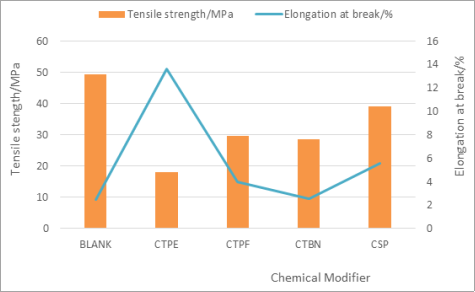
The tensile strength and impact strength, which was usually used to evaluate the resistance ability of the samples to external force, are critical properties of obtained composites for practical applications, as they ensure the normal use of these materials under high stress conditions. In chemical reaction-type toughening agents, the curing of long molecular segments reduces crosslink density, exhibiting softening and toughening effects. The toughened material becomes more flexible, with decreased cohesive strength and significantly improved elongation at break. The impact on tensile properties is shown in Figure 1. The tensile strength of all toughened systems decreased. CSP exhibited the best tensile strength retention at 78.9% of the blank sample, while CTPE showed the lowest retention at 36.5%. Toughening in this system concurrently produced a softening effect, with fracture elongation markedly increasing. Specifically, CPPE increased by 457%, and CSP increased by 129%.
Figure 1. Effect of Reactive Toughening Agents on Tensile Properties.
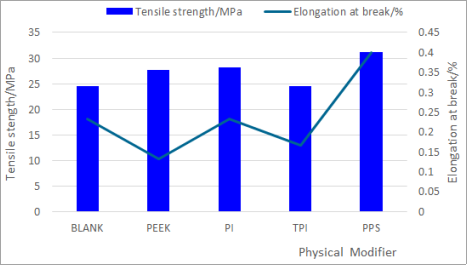
For physically added toughening agents, the curing agent used in this study is PMDA. After curing with epoxy resin, it exhibits high crosslink density, excellent heat resistance in the cured body, but relatively high brittleness. Figure 2 shows the comparison of tensile strength and tensile modulus between the control blank material without plastic particles and the material with 10% plastic powder added.
When subjected to tensile stress, the epoxy cured material develops numerous micro-cracks. The dispersed SEP powder particles within the resin prevent rapid crack propagation, resulting in a noticeable increase in tensile strength and modulus. Among several SEP types, PEEK, PI, TPI, and PPS exhibit superior dispersion in epoxy resin. These materials effectively distribute tensile stress, prevent micro-crack formation, and enhance tensile strength and modulus. PPS shows the most pronounced improvement.
Figure 2. Effect of Physically Added Toughening Agents on Tensile Properties.
Among these SEP types, PEEK, PI, and TPI are all highly rigid varieties. Their primary effect on tensile properties lies in inhibiting micro-crack propagation, with no significant improvement in elongation at break. In contrast, PPS base material exhibits superior toughness. Under tensile stress, besides the aforementioned crack-propagation inhibition, the inherent toughness of its plastic particles slightly increases elongation at break. See the figure below. Among these, PPS application resulted in a 27.4% increase in tensile strength, a 16% rise in tensile modulus, and a 71% increase in elongation at break, demonstrating the most pronounced overall effect on tensile properties.
3.2.2. Compression Performance
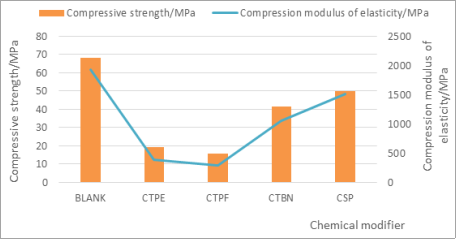
As shown in Figure 3, the curing of long molecular segments in chemically reactive toughening agents reduces crosslink density, exhibiting softening and toughening effects. The resulting toughening becomes more flexible, with decreased cohesive strength. The enhanced flexibility of the molecular chains facilitates compression, leading to reduced compressive strength. Specifically, the compressive strength of CTPE and CTPF modifications is only about one-third that of the blank sample, while CTBN and CSP maintain approximately 70% of their original strength. Compressive elastic modulus follows a similar pattern.
Figure 3. Effect of Reactive Toughening Agents on Compression Properties.
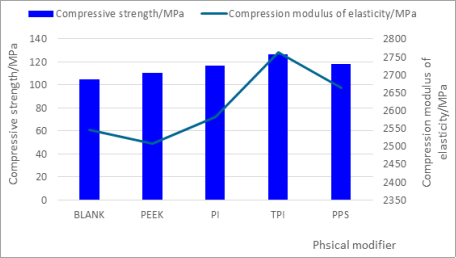
As shown in Figure 6, the PMDA-cured epoxy system exhibits high bulk rigidity, cohesive strength, and compressive strength, making the bulk material resistant to compression. The introduced SEP itself contains a large number of rigid monomers, resulting in a higher bulk compressive strength than pure epoxy. Therefore, the introduction of SEP slightly increases the compressive properties. Compressive strength and compressive modulus exhibit similar patterns.
Figure 4. Effect of Physically Added Toughening Agents on Compression Properties.
3.2.3. Impact Strength
To further understand the relationship between toughening agents and resins, the impact test was carried out to estimate the composites’ resistance to external impact force.
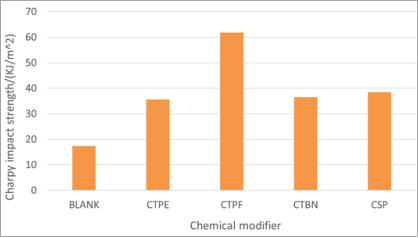
Figure 5. Effect of Reactive Toughening Agents on Impact Strength.
As shown in Figure 5, reactive toughening agents incorporated into the epoxy resin curing system form toughening segments. When the material undergoes impact, these segments effectively absorb the impact energy, resulting in a significant increase in impact strength. The materials selected in this study all exhibit over 100% improvement in impact strength, with the CTPF system achieving 257% enhancement, demonstrating excellent impact resistance.
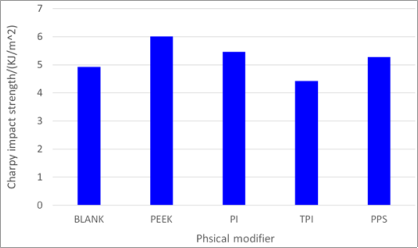
The selection of SEP to modify epoxy resins is expected to significantly enhance their impact resistance. Among the engineering plastics examined in this paper, materials such as PEEK, PI, and PPS achieve uniform dispersion within the epoxy matrix. During resin curing, micro-phase separation occurs between the plastic molecules and the epoxy resin, forming island structures, particle crack bridging, and crack path deflection. These structures collectively improve the toughness of the epoxy resin. Additionally, certain active groups within SEP penetrate the epoxy crosslinking network, acting as network nodes. Upon impact energy absorption, these nodes disperse stress and absorb energy, contributing to enhanced impact resistance.
Figure 6. Effect of Physically Added Toughening Agents on Impact Strength.
3.3. Optical Performance
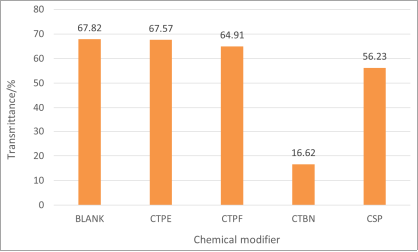
Reactive toughening agents incorporated into epoxy resins react with epoxy groups to form a uniform molecular structure. Furthermore, the reactive toughening agents bear active groups such as epoxy, hydroxyl, or amino at both ends, enabling copolymerization with the epoxy-curing agent network. The molecular chains are “anchored” into the matrix, forming a homogeneous phase without secondary phase particles, thereby eliminating interfacial scattering. Among these reactive toughening agents, CTBN undergoes “acid-epoxy” ring-opening esterification with epoxy groups in epoxy resins, forming β-hydroxy esters and introducing flexible nitrile blocks between macromolecular chains. This reaction occurs concurrently with epoxy-amine crosslinking, chemically anchoring CTBN within the crosslinked network to form a "continuous epoxy phase – nano-rubber micro-domain" structure.
Figure 7. Effect of Reactive Toughening Agents on Light Transmittance.
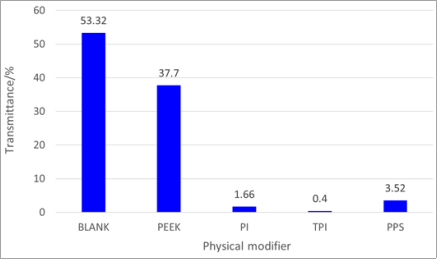
Physical additives cannot react or dissolve uniformly within the epoxy resin matrix; instead, they disperse as solid particles without forming a homogeneous phase. When plastic powder particle sizes fall within the 0.4–3 µm range (equivalent to or larger than visible light wavelengths), light scatters at the interfaces. The scattering cross-section increases sharply with particle size, leading to a significant decrease in light transmittance. After curing, 50–300nm rubber microregions are precipitated, resulting in Rayleigh-Debye scattering, with increased haze and relatively large decrease in light transmittance.
Figure 8. Effect of Physically Added Toughening Agents on Light Transmittance.
Relatively speaking, smaller particle sizes in these additive toughening agent result in lower losses, exhibiting reduced light transmittance loss. For example, the PEEK particles in the figure have a 900-mesh size, which is smaller than other additive powders, thus showing slightly lower light transmittance loss. In addition, the PEEK backbone only contains aromatic ketones and aromatic ethers, without conjugated chromophores, and there is no absorption peak for visible light above 400 nm,the higher transmittance is observed.
3.4. Heat Resistance
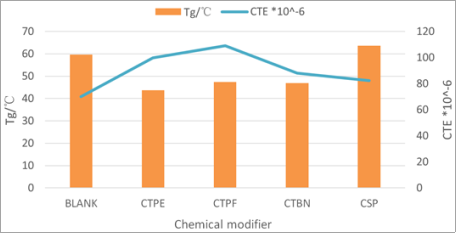
The incorporation of flexible reactive toughening agents into epoxy resins introduces flexible segments into the epoxy molecular chains, enhancing molecular chain creepability. This results in increased toughness and flexibility after curing, typically lowering the glass transition temperature (Tg), as shown in Figure 7. Notably, CTPE and CTPF modifications exhibit a significant decrease in Tg.
Figure 9. Effect of Reactive Toughening Agents on Tg and CTE.
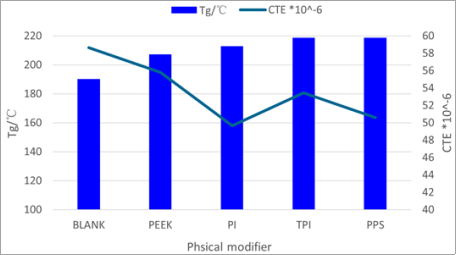
Figure 10. Effect of Physically Added Toughening Agents on Tg and CTE.
Among these reactive toughening agents, core-shell polymers exhibit distinct behavior. This is because CSP is pre-synthesized via emulsion polymerization into 50–300 nm hard-shell/soft-core particles, which are then physically dispersed in the epoxy matrix. Since the rubber phase is already crosslinked and cured, the shell functional groups (e.g., methacrylic acid) only undergo interfacial grafting with the epoxy, without releasing low-molecular-weight segments into the matrix. Consequently, this approach neither reduces crosslink density nor induces plasticizing dilution effects. The core layer provides a rigid skeleton that physically restricts the movement of the epoxy backbone segments, resulting in a slight increase in Tg.
Figure 10 summarizes the effects of several SEPs on the Tg of epoxy resin. The incorporation of these SEPs uniformly elevated the resin's Tg, with PI and PPS increasing it by over 20°C, demonstrating excellent heat resistance. The factors influencing the heat resistance of modified epoxy include: First, several SEPs inherently contain a large number of rigid units, making them more heat-resistant than pure epoxy. Their incorporation enhances heat resistance. Second, the addition of rigid plastic powders to the epoxy resin occupies part of the volume, making it more difficult for the molecular segments in the cured system to move, thereby contributing to improved heat resistance. Several other engineering plastic powders exhibit similar curing reaction mechanisms in epoxy resins as PI powder, consequently also elevating the glass transition temperature of the modified epoxy resin. The impact of engineering plastic powders on the thermal expansion coefficient stems from two factors. On the other hand, the active groups within the plastic powder form cross-linked structures or intermolecular forces with the epoxy resin matrix, reducing the mobility of the molecular chains. This factor leads to a decrease in the thermal expansion coefficient. The final observed thermal expansion coefficient is the result of the combined effects of both factors.
3.5. Electrical Performance
Table 7. Volume Resistivity of CRT.

Sample

ρv/(Ω.cm)

CRT-0

7.4*1015

CRT-1

7.5*1014

CRT-2

9.6*1014

CRT-3

1.5*1015

CRT-4

4.2*1015

The effect of reactive toughening agents on volume resistivity is shown in the Table 7. Among them, CTPE and CTPF toughening agents contain polyether chain segments (-CH₂-CH₂-O-) or (-CH₂-CH₂-CH₂-CH₂-O-), which are flexible and have high polarity, and play a role in "internal plasticization" in the epoxy cross-linking network, reducing the glass transition temperature and improving the movement ability of the chain segment. After the acceleration of the chain segment movement, the free volume of the system increases, the ion mobility of trace impurities such as Na⁺ and Cl⁻ increases, the DC conductivity increases, and the volume resistivity decreases by about half an order of magnitude. K⁺, Na⁺ catalysts and low molecular weight polyether alcohols often remain in the synthesis of polyether polyols. These hydrophilic impurities migrate with the polyether phase during curing, forming a local "high ion concentration channel", which also reduces the volume resistivity. Therefore, the toughening system of CTPE and CTPF leads to a reduction of about an order of magnitude in volumetric resistivity, while CTBN and CSP do not have this effect, and the volumetric resistivity remains basically unchanged.
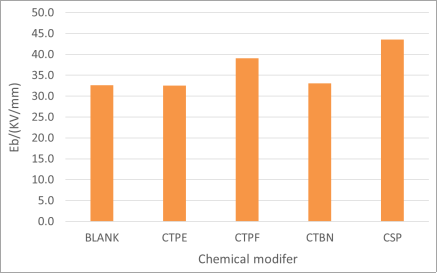
Among these reactive toughening agents, CTPE, CTPF, and CTBN exhibit negligible effects on electrical strength, performing essentially equivalent to or slightly better than un-toughened samples. In contrast, the CSP system demonstrates significantly enhanced electrical strength. This stems from several factors: CSP particles are uniformly dispersed at the nanoscale (50–300 nm), far smaller than common inorganic fillers (>1 µm), enabling uniform dispersion in epoxy without forming large agglomerates. The cured material contains no significant voids or impurity clusters, preventing “weak points” that could nucleate breakdown paths. The hard shell-core interface introduces “deep traps” that inhibit carrier migration through the shell layer. Upon forming covalent bonds with the epoxy matrix, the shell PMMA generates numerous deep trap energy levels (1.2–1.5 eV) at the rubber-epoxy interface. These traps capture injected electrons/holes, reducing carrier effective mobility and delaying breakdown occurrence. Simultaneously, nanoparticles induce a “pinning-forking” effect on the tree channels, increasing the tortuosity of breakdown paths and effectively raising the breakdown field strength. The combined effects result in a macroscopic electrical strength improvement of approximately 33.4% for CSP-toughened epoxy resins compared to unmodified materials.
Figure 11. Effect of Reactive Toughening Agents on Electrical Strength.
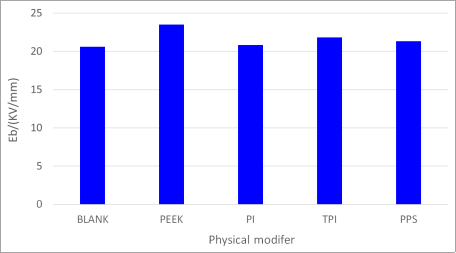
The effect of physically added toughening agents on volume resistivity is shown in the Table 8, on electrical strength is shown in Figure 12.
Normally, epoxy resin volumetric resistivity (ρv) is about 1015Ω.cm, while PEEK, PPS and other SEPs are in the order of 1016Ω.cm. Therefore, it is inevitable that the dispersion of engineering plastic powder with better insulation into epoxy resin will cause an increase in volume resistivity, of course, it is also related to the degree of dispersion uniformity and the interaction between plastic powder groups and epoxy resin molecules during the curing process.
Similar to their impact on volume resistivity, these SEPs exhibit excellent electrical insulation properties. When incorporated into epoxy resin modification systems, they fully leverage their superior electrical performance, significantly enhancing epoxy modification. They undoubtedly represent an excellent choice for applications requiring high electrical performance.
Table 8. Volume Resistivity of PAT.

Sample

ρv/(Ω.cm)

PAT-0

6.53*1015

PAT-1

2.13*1016

PAT-2

3.39*1015

PAT-3

1.03*1016

PATT-4

9.89*1015

Figure 12. Effect of Physically Added Toughening Agents on Electrical Strength.

4. Conclusions
The main conclusions drawn from this research were as follows:
1) Modification Effect: Both reactive and additive toughening agents can be used for toughening modification of epoxy resins;
2) Viscosity Effect: After modification with reactive or additive toughening agents, viscosity generally increases from low to high depending on the toughening agents type, with reactive agents having a relatively smaller impact. Reactive-toughened resins exhibit Newtonian fluid behavior, while additive-toughened resins display non-Newtonian fluid characteristics;
3) Dispersibility: Reactive toughening agents readily disperse in epoxy resin to form a liquid homogeneous phase, while additive toughening agents form liquid-solid phases. Different SEP structures exert varying modification effects on epoxy resin, with SEP morphology and dispersion state significantly influencing modification outcomes;
4) Mechanical Effects: Reactive toughening agents enhance toughness while exhibiting some plasticizing effects, typically reducing hardness, tensile strength, and compressive strength while improving impact strength and elongation at break. Mechanical Effects: Uniformly dispersed additives like PEEK, PI, TPI, and PPS in epoxy resins enhance mechanical properties including tensile, compressive, and impact performance.
5) Optical Properties: Reactive additives form a homogeneous system, dispersing at the molecular scale within the epoxy matrix, thus minimally affecting light transmission. However, micro-phase separation during curing can cause a noticeable decrease in transparency. Additive toughening agents are dispersed in epoxy resin via physical blending. Since the particle size of the dispersed phase exceeds the wavelength of visible light, significant absorption and diffuse reflection occur during light transmission, causing a drastic decrease in the transparency of the cured material. They are generally unsuitable for transparent optical applications;
6) Thermal Properties: Reactive toughening agents such as CTPE and CTPF cause a noticeable decrease in Tg, while CTBN and CSP show no significant change; Among additive toughening agents, several SEP-modified epoxy resins exhibit markedly enhanced heat resistance;
7) Electrical Properties: Reactive toughening agents show no significant impact on electrical properties, while additive toughening agents markedly improve electrical insulation performance, with PEEK exhibiting substantially increased volume resistivity.
Abbreviations

CTPE

Carboxyl-Terminated Polyether

CTPF

Carboxyl-Terminated Polytetrahydrofuran

CTBN

Carboxyl-Terminated Liquid Butadiene Nitrile Rubber

CSP

Core-Shell Polymers Containing Polybutadiene

SEP

Special Engineering Plastics

PEEK

Polyether Ether Ketone

PI

Polyimide

TPI

Thermoplastic Polyimide

PPS

Polyphenylene Sulfide

CRT

Chemically Reactive Toughening

PAT

Physically Added Toughening

Acknowledgments
The people involved in this article are listed in the author directory, and we also thank the anonymous reviewers for their valuable comments. The author(s) received no financial support for the research, authorship, and/or publication of this article. This research also did not receive any specific grant from funding agencies in the public, commercial, or not-for-profit sectors.
Author Contributions
Zhou Jianwen: Conceptualization, Methodology, Writing – original draft
Wang Hong: Project administration, Resources
Liu Haiyan: Data curation, Methodology
Conflicts of Interest
The authors declare no conflicts of interest.
References
[1] Wang M Y, Yu S W, Zhao C J, et al. Modification of bisphenol A type epoxy resin by biobased magnolol epoxy [J]. High Performance Polymers, 2024, 36(8): 430-440.
[2] Lv X Y, Wu S B, Zhao D Y. Preparation and performance of MWNTs/ epoxy resins composites [J]. Journal of Inorganic and Organometallic Polymers and Materials, 2024, 34(10): 1-10.
[3] Yi R J, Ke J X, Zhou J W, et al. Preparation and evaluation of epoxy based material for high performance electronic packaging through the surface modification of fillers [J]. Journal of Macromolecular Science: Physics, 2025, 64(1): 66-87.
[4] Shi W, Li J, Wang C Y, et al. Fabrication of polyurethane/polythiourethane core–shell microspheres via thiol-isocyanate click chemistry and their application in toughening epoxy resin [J]. Polymer Bulletin, 2025, 82(1): 1-24.
[5] Liang D Y, Li X, Zhang Y X, et al. Preparation and properties analysis of CTBN/CeO2 co-toughened epoxy resin composites [J]. Polymer Composites, 2025, 46(4): 3480-3495.
[6] Yasushi M, Masayuki N, Yoko M, et al. Statistical creep failure time prediction for UD-CFRP with heat resistant epoxy resin as matrix under tension load [J]. Materials System, 2022, 39(1): 33-38.
[7] Fedoseev M S, Gusev V Y, Derzhavinskaya L F, et al. Heat-resistant epoxy polymers of anhydride curing [J]. Polymer Science - Series D, 2018, 11(1): 39-46.
[8] Zhang P, Ding X, Wang Y Y, et al. Low-melting-point alloy continuous network construction in a polymer matrix for thermal conductivity and electromagnetic shielding enhancement [J]. ACS Applied Polymer Materials, 2019, 1(8): 2006-2014.
[9] Wang Z D, Zhou Y H, Luo M, et al. Superior thermal transport and electrically insulating properties of epoxy composites with waxberry-like calcined alumina/poly diallyldimethylammonium chloride/diamond [J]. Composites Science and Technology, 2024, 248: 110440.
[10] Neves R M, Ornaghi H L, Zattera A J, et al. Toughening epoxy resin with liquid rubber and its hybrid composites: A systematic review [J]. Journal of Polymer Research, 2022, 29(8): 340-355.
[11] Bian X, Tuo R, Yang W, et al. Mechanical, thermal, and electrical properties of BN-epoxy composites modified with carboxyl-terminated butadiene nitrile liquid rubber [J]. Polymers, 2019, 11(10): 1548-1561.
[12] Liu X F, Luo X, Liu B W, et al. Toughening epoxy resin using a liquid crystalline elastomer for versatile application [J]. ACS Applied Polymer Materials, 2019, 1(9): 2291-2301.
[13] Tian K, Yang S, Ni J, et al. Enhanced thermal conductivity and mechanical toughness of the epoxy resin by incorporation of meso-gens without nano-fillers [J]. IEEE Access, 2021, 9: 31575-31580.
[14] Bao Q R, Wang B W, Liu Y, et al. Epoxy resin flame retarded and toughed via flexible siloxane chain containing phosphaphenanthrene [J]. Polymer Degradation & Stability, 2020, 172(1): 109055.
[15] Zhou W, Zuo J. Mechanical, thermal and electrical properties of epoxy modified with a reactive hydroxyl-terminated polystyrene-butadiene liquid rubber [J]. Journal of Reinforced Plastics and Composites, 2013, 32(18): 1359-1369.
[16] Di C R, Yu J W, Wang B M, et al. Study of hybrid nanoparticles modified epoxy resin used in filament winding composite [J]. Materials, 2019, 12(23), 3853-3863.
[17] Jung H S, Park Y, Nah C W, et al. Evaluation of the mechanical properties of polyether sulfone -toughened epoxy resin for carbon fiber composites [J]. Fibers and Polymers, 2021, 22(1): 184-195.
[18] Zhou Jianwen, Huang Yizhou, Wang Hong, Huang Yi. Practical Technology of Toughening Epoxy Resin: Influence of Toughening Agents on Mechanical and Heat Properties. International Journal of Industrial and Manufacturing Systems Engineering. Special Issue: Manufacturing Strategy for Competitiveness. Vol. 4, No. 2, 2019, pp. 19-23.
[19] Zhou Jianwen, Huang Yizhou, Wang Hong. Practical Technology of Toughening Epoxy Resin (II): Modification Effects of Special Engineering Plastics on Epoxy Resin. American Journal of Materials Synthesis and Processing. Vol. 9, No. 1, pp. 10-22.
Cite This Article
  • APA Style

    Jianwen, Z., Hong, W., Haiyan, L. (2025). Selection of Toughening Materials for Epoxy Resins and Discussion on Toughening Technology Approaches. American Journal of Materials Synthesis and Processing, 10(2), 36-49. https://doi.org/10.11648/j.ajmsp.20251002.12

    Copy | Download

    ACS Style

    Jianwen, Z.; Hong, W.; Haiyan, L. Selection of Toughening Materials for Epoxy Resins and Discussion on Toughening Technology Approaches. Am. J. Mater. Synth. Process. 2025, 10(2), 36-49. doi: 10.11648/j.ajmsp.20251002.12

    Copy | Download

    AMA Style

    Jianwen Z, Hong W, Haiyan L. Selection of Toughening Materials for Epoxy Resins and Discussion on Toughening Technology Approaches. Am J Mater Synth Process. 2025;10(2):36-49. doi: 10.11648/j.ajmsp.20251002.12

    Copy | Download

  • @article{10.11648/j.ajmsp.20251002.12,
      author = {Zhou Jianwen and Wang Hong and Liu Haiyan},
      title = {Selection of Toughening Materials for Epoxy Resins and Discussion on Toughening Technology Approaches},
      journal = {American Journal of Materials Synthesis and Processing},
      volume = {10},
      number = {2},
      pages = {36-49},
      doi = {10.11648/j.ajmsp.20251002.12},
      url = {https://doi.org/10.11648/j.ajmsp.20251002.12},
      eprint = {https://article.sciencepublishinggroup.com/pdf/10.11648.j.ajmsp.20251002.12},
      abstract = {The technical approaches for toughening epoxy resins include chemical and physical methods. Regarding the chemically reactive toughening (CRT)methods, this study employs reactive toughening agents and compares the toughening effects of several agents such as carboxyl-terminated polyether (CTPE), carboxyl-terminated polytetrahydrofuran (CTPF), carboxyl-terminated liquid butadiene nitrile rubber (CTBN), and core-shell polymers containing polybutadiene (CSP), on epoxy resins. These toughening agents are incorporated into the epoxy resin through chemical reactions or dispersion, forming flexible segments with impact resistance. During the curing process, micro-phase separation occurs, forming an island structure that absorbs energy under stress. At equivalent dosages, all toughening agents have a significant toughening effect on epoxy resin, with a notable improvement in impact resistance. Among them, CTPF and CTBN demonstrated particularly pronounced improvements, with the impact strength of CTPF-modified resin increasing by 257%. These agents form homogeneous phases in epoxy resin with minimal impact on transparency, making them viable options for transparent toughening. CTPE and CTPF lead to a decrease in thermal resistance, while CTBN and CSP have almost no effect on thermal resistance. CTPE and CTPF exhibited decreased volume resistivity due to enhanced impurity ion migration caused by flexible polyether segments. CSP improved electrical strength by reducing the effective carrier mobility of its structure. For the physical added thoughening (PAT) methods of toughening epoxy resin, this paper adopts the physical addition approach and compares the effects of special engineering plastics (SEP) such as polyetheretherketone (PEEK), polyimide (PI), thermoplastic polyimide (TPI), and polyphenylene sulfide (PPS) on the mechanical, thermal, and electrical properties of epoxy resin. The rigid and active group-containing SEP forms a difference phase during the curing process of epoxy resin, absorbing energy under stress, preventing the propagation of microcracks, and improving the mechanical properties of epoxy resin, including tensile, compressive, and impact strength. Due to the phase separation caused by the physical toughening method, there is significant light reflection and absorption loss, making it usually difficult to be used as a transparent toughening method. SEP has better heat resistance than epoxy resin, which is beneficial for enhancing the heat resistance of epoxy resin. During the curing process of epoxy, a strong intermolecular force is generated between SEP and epoxy resin, further enhancing the heat resistance of the modified epoxy resin. Adding SEP with better insulation performance can effectively improve the insulation performance of epoxy resin.},
     year = {2025}
    }
    

    Copy | Download

  • TY  - JOUR
    T1  - Selection of Toughening Materials for Epoxy Resins and Discussion on Toughening Technology Approaches
    AU  - Zhou Jianwen
    AU  - Wang Hong
    AU  - Liu Haiyan
    Y1  - 2025/12/17
    PY  - 2025
    N1  - https://doi.org/10.11648/j.ajmsp.20251002.12
    DO  - 10.11648/j.ajmsp.20251002.12
    T2  - American Journal of Materials Synthesis and Processing
    JF  - American Journal of Materials Synthesis and Processing
    JO  - American Journal of Materials Synthesis and Processing
    SP  - 36
    EP  - 49
    PB  - Science Publishing Group
    SN  - 2575-1530
    UR  - https://doi.org/10.11648/j.ajmsp.20251002.12
    AB  - The technical approaches for toughening epoxy resins include chemical and physical methods. Regarding the chemically reactive toughening (CRT)methods, this study employs reactive toughening agents and compares the toughening effects of several agents such as carboxyl-terminated polyether (CTPE), carboxyl-terminated polytetrahydrofuran (CTPF), carboxyl-terminated liquid butadiene nitrile rubber (CTBN), and core-shell polymers containing polybutadiene (CSP), on epoxy resins. These toughening agents are incorporated into the epoxy resin through chemical reactions or dispersion, forming flexible segments with impact resistance. During the curing process, micro-phase separation occurs, forming an island structure that absorbs energy under stress. At equivalent dosages, all toughening agents have a significant toughening effect on epoxy resin, with a notable improvement in impact resistance. Among them, CTPF and CTBN demonstrated particularly pronounced improvements, with the impact strength of CTPF-modified resin increasing by 257%. These agents form homogeneous phases in epoxy resin with minimal impact on transparency, making them viable options for transparent toughening. CTPE and CTPF lead to a decrease in thermal resistance, while CTBN and CSP have almost no effect on thermal resistance. CTPE and CTPF exhibited decreased volume resistivity due to enhanced impurity ion migration caused by flexible polyether segments. CSP improved electrical strength by reducing the effective carrier mobility of its structure. For the physical added thoughening (PAT) methods of toughening epoxy resin, this paper adopts the physical addition approach and compares the effects of special engineering plastics (SEP) such as polyetheretherketone (PEEK), polyimide (PI), thermoplastic polyimide (TPI), and polyphenylene sulfide (PPS) on the mechanical, thermal, and electrical properties of epoxy resin. The rigid and active group-containing SEP forms a difference phase during the curing process of epoxy resin, absorbing energy under stress, preventing the propagation of microcracks, and improving the mechanical properties of epoxy resin, including tensile, compressive, and impact strength. Due to the phase separation caused by the physical toughening method, there is significant light reflection and absorption loss, making it usually difficult to be used as a transparent toughening method. SEP has better heat resistance than epoxy resin, which is beneficial for enhancing the heat resistance of epoxy resin. During the curing process of epoxy, a strong intermolecular force is generated between SEP and epoxy resin, further enhancing the heat resistance of the modified epoxy resin. Adding SEP with better insulation performance can effectively improve the insulation performance of epoxy resin.
    VL  - 10
    IS  - 2
    ER  - 

    Copy | Download

Author Information
  • Abstract
  • Keywords
  • Document Sections

    1. 1. Introduction
    2. 2. Experimental Section
    3. 3. Results and Discussion
    4. 4. Conclusions
    Show Full Outline
  • Abbreviations
  • Acknowledgments
  • Author Contributions
  • Conflicts of Interest
  • References
  • Cite This Article
  • Author Information